Common Objections
Common Objections
Common Objections


Baptism is only a public profession of faith
Many evangelical Christians believe that baptism is a public profession of faith—a way of announcing to the world that we’ve accepted Jesus Christ as our Savior.
And baptism certainly can serve that purpose. But is that why Jesus commanded us to be baptized?
I’ve often asked evangelicals where the Bible says that baptism is supposed to be a public profession of faith. So far, I haven’t received an answer.
In fact, several baptisms recorded in the New Testament appear to have taken place privately.
What about the baptisms recorded in Scripture?
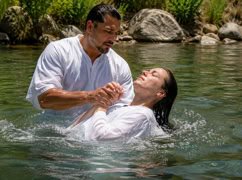
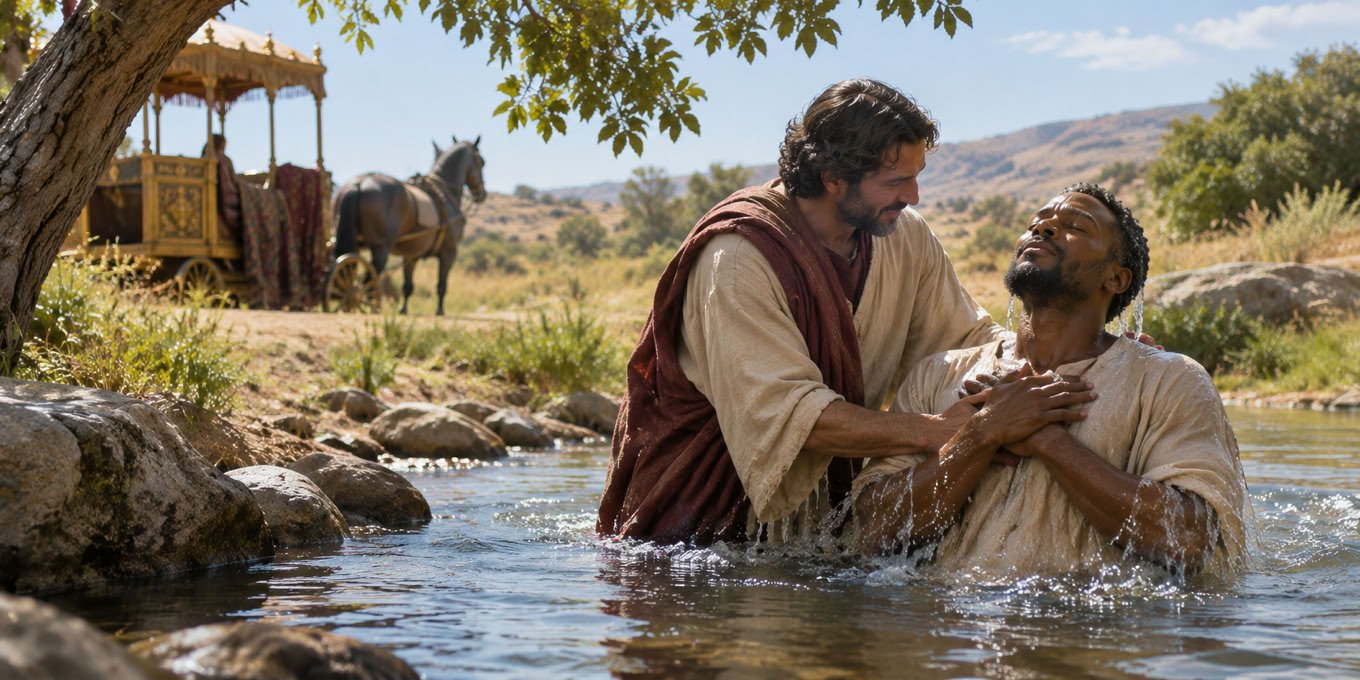
Consider the Ethiopian eunuch. Philip explained the gospel to him as they traveled along a road. When they came to some water, the eunuch asked to be baptized, and Philip baptized him right there (Acts 8:36–38).
Who was the audience for this public profession of faith? The eunuch’s traveling companions, perhaps? Scripture doesn’t say.
Or consider Saul, who was baptized after Ananias came to him in Damascus. His baptism appears to have taken place in a house (Acts 9:17–19).
Then there’s the Philippian jailer. After an earthquake opened the doors of the prison, Paul and Silas preached the gospel to him and his household. Luke tells us that he and his family were baptized immediately, in the middle of the night (Acts 16:25–34).
These accounts don’t suggest that the purpose of baptism was to make a public announcement to the surrounding community.
And in the early years of Christianity, publicly identifying yourself as a Christian could result in persecution, imprisonment, or even death.
What does the Bible say baptism accomplishes?
If baptism isn’t merely a public profession of faith, what is it?
When the crowd at Pentecost asked Peter what they should do, he replied:
“Repent and be baptized, every one of you, in the name of Jesus Christ for the forgiveness of your sins. And you will receive the gift of the Holy Spirit” (Acts 2:38).
Peter didn’t describe baptism as a public declaration that his listeners had already been saved. He connected it with receiving forgiveness and the Holy Spirit.
When Ananias came to Saul, he told him:
“And now what are you waiting for? Get up, be baptized and wash your sins away, calling on his name” (Acts 22:16).
Paul described baptism as the means by which we are united with Christ in his death and resurrection:
“We were therefore buried with him through baptism into death in order that, just as Christ was raised from the dead through the glory of the Father, we too may live a new life” (Romans 6:4).
And Peter made an even more remarkable statement:
“Baptism … now saves you” (1 Peter 3:21).
These passages describe baptism as something through which God acts, not merely something we do to tell other people about our faith.
But isn’t baptism an act of obedience?
Of course it is. Jesus commanded his disciples to baptize (Matthew 28:19), and Christians should obey him.
But that raises another question: Why did Jesus command baptism?
We generally understand that Jesus had reasons for his commandments. He tells us to forgive others, love our enemies, care for the poor, and avoid sin. These commands have purposes beyond simply demonstrating our willingness to obey.
Yet when evangelicals explain why Jesus commanded baptism, the answer often amounts to little more than “Because he said so.”
It’s rather like a child asking a parent why he has to do something and being told, “Because I said so.”
Obedience explains why we should do what Jesus commands. It doesn’t explain why he commanded it in the first place.
And in the case of baptism, Scripture gives us the answer. God uses baptism to forgive sins, give us new spiritual life, and unite us with Christ.
None of this means that baptism earns salvation or that the water has some magical power. Salvation is God’s gift, made possible by Christ’s death and resurrection. Baptism is one of the means by which he gives us that gift.
Conclusion
There’s nothing wrong with celebrating baptism publicly or regarding it as an opportunity to profess our faith in Jesus Christ.
But the Bible never identifies making a public profession of faith as baptism’s essential purpose. Instead, it repeatedly describes baptism as something through which God gives us spiritual blessings.
Baptism certainly expresses our faith. But according to Scripture, it does considerably more than that.
Featured Articles
Copyright © 2024–[YEAR] Catholic Odyssey