Common Objections
Common Objections
Common Objections


The Catholic Church forbade ordinary people to read the Bible
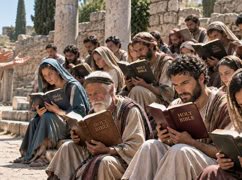
It’s sometimes claimed that the Catholic Church has historically discouraged ordinary Christians from reading the Bible, supposedly to prevent them from discovering that its teachings contradict Scripture. But is that what the Church actually teaches? Quite the opposite. Here’s what the Catechism of the Catholic Church says:
The Church forcefully and specifically exhorts all the Christian faithful . . . to learn the surpassing knowledge of Jesus Christ, by frequent reading of the divine Scriptures. Ignorance of the Scriptures is ignorance of Christ.1
What about the past?
Isn’t it true that Catholics in the past weren’t allowed to read the Bible?
The Catholic Church never imposed a universal prohibition against reading Scripture. It did, however, sometimes restrict access to Bibles in the languages ordinary people spoke. After the Protestant Reformation, for example, rules issued under Pope Pius IV in 1564 required Catholics to obtain permission to read vernacular Bibles, even translations produced by Catholics.2
These restrictions arose in an era of intense religious controversy. Church authorities were concerned that translations, prefaces, marginal notes, and commentaries could promote teachings they considered erroneous. Whether the restrictions were justified is a separate question. But they weren’t a general prohibition against ordinary Christians reading Scripture.
In fact, throughout Christian history, Catholic leaders have encouraged the faithful to read and study the Bible.
What Catholic leaders actually said
In the fourth century, St. John Chrysostom (c. 347–407), a bishop and one of Christianity’s most influential early preachers, wrote:
This is what has ruined everything, your thinking that the reading of scripture is for monks only, when you need it more than they do. Those who are placed in the world, and who receive wounds every day have the most need of medicine. So, far worse even than not reading the scriptures is the idea that they are superfluous. Such things were invented by the devil.3
Pope Gregory the Great (died 604) wrote:
The Emperor of heaven, the Lord of men and of angels, has sent you His epistles for your life’s advantage—and yet you neglect to read them eagerly. Study them, I beg you, and meditate daily on the words of your Creator. Learn the heart of God in the words of God, that you may sigh more eagerly for things eternal, that your soul may be kindled with greater longings for heavenly joys.4
In the twelfth century, St. Bernard of Clairvaux (1090–1153) wrote:
The person who thirsts for God eagerly studies and meditates on the inspired Word, knowing that there, he is certain to find the One for whom he thirsts.5
And in the early twentieth century, Pope Pius X encouraged Catholics to make Scripture reading a daily habit:
Nothing would please us more than to see our beloved children form the habit of reading the Gospels—not merely from time to time, but every day.
These aren’t the words of men who believed ordinary Christians should be kept ignorant of Scripture.
The Catholic Church did impose restrictions on Bible reading at certain times in its history. But the claim that it opposed ordinary Christians reading the Bible is difficult to reconcile with the repeated encouragement of Catholic bishops, saints, and popes over the centuries.
__________
1 Catechism of the Catholic Church, 133.
2 Pope Pius IV, Index of Prohibited Books, Rule IV (1564).
3. John Chrysostom, Homilies on Matthew, Homily 2.
4. Gregory the Great, Letters, 5.46.
5. Bernard of Clairvaux, Sermons on the Song of Songs, 23.3.
6. Pope Pius X (1907), quoted in John Laux, Introduction to the Bible (1932), Preface to Teacher. Read the source (PDF).

Featured Articles
Copyright © 2024–[YEAR] Catholic Odyssey