Common Objections
Common Objections
Common Objections


Jesus already paid the full penalty for our sins. We don’t have to suffer for them ourselves
Christ’s sacrifice on the cross was completely sufficient to save us from our sins. Catholics certainly don’t believe that we must somehow make up for anything lacking in his sacrifice.
But there’s an important distinction between the punishment that condemns sinners and the discipline by which God corrects his children. Catholics don’t believe that those who belong to Christ must suffer the condemnation he has saved them from. But Scripture shows that even forgiven sinners may still undergo painful correction and purification.
Consider King David
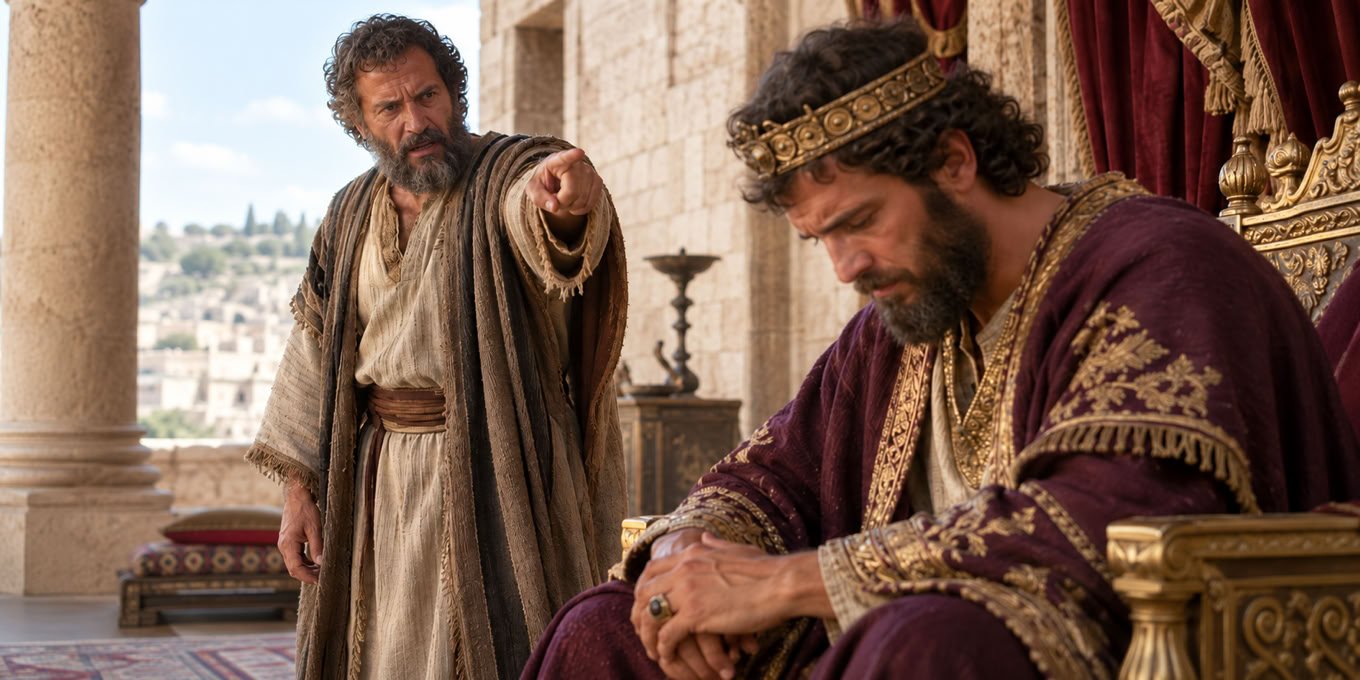
After committing adultery with Bathsheba, David arranged for her husband, Uriah, to be killed in battle to conceal what he had done. The prophet Nathan subsequently confronted David about his sins, and David acknowledged his guilt.
Nathan then told him:
The LORD has taken away your sin. You are not going to die (2 Samuel 12:13).
David had been forgiven. Yet Nathan announced that David would nevertheless suffer terrible consequences for his sins:
Now, therefore, the sword will never depart from your house, because you despised me and took the wife of Uriah the Hittite to be your own (2 Samuel 12:10).
These were not merely the natural consequences of David’s actions. They were punishments that God himself declared he would inflict because of David’s sins—even though those sins had been forgiven.
God disciplines his children
We find the same principle in the New Testament.
In 1 Corinthians 11:29–30, Paul tells us that some Christians had become weak or sick, and others had even died, because they had failed to discern the body of Christ when receiving the Lord’s Supper.
Paul then explains:
When we are judged by the Lord, we are being disciplined so that we will not be condemned with the world (1 Corinthians 11:32).
Notice the distinction Paul makes. God’s judgment upon these Christians wasn’t a denial of their salvation, but a means of preserving them from condemnation. Their punishment was corrective rather than condemnatory.
Why would God discipline someone whose sins have been forgiven? Hebrews provides the answer:
God disciplines us for our good, that we may share in his holiness (Hebrews 12:10).
God disciplines his children, not because Christ’s sacrifice was insufficient, but because they still need to be made holy.
Divine discipline, then, isn’t opposed to Christ’s saving work. It’s one of the means by which that work bears fruit in our lives.
What does this have to do with purgatory?
The Catholic doctrine of purgatory teaches that those who die in God’s friendship, but who still need purification, undergo that final purification before entering heaven, where “nothing impure will ever enter” (Revelation 21:27).
This purification doesn’t make up for anything lacking in Christ’s sacrifice. Rather, it’s through that sacrifice that we’re saved and made holy.
These passages don’t prove the existence of purgatory. But they do refute the objection that purification after forgiveness would somehow diminish the sufficiency of Christ’s sacrifice. Scripture shows that God may continue to discipline and purify those whose sins he has forgiven. There’s no contradiction between that biblical principle and the Catholic doctrine of purgatory.
Featured Articles
Copyright © 2024–[YEAR] Catholic Odyssey