Common Objections
Common Objections
Common Objections


Catholics treat holy water as though it has magical powers
Catholics dip their fingers into holy water when entering a church, sprinkle it on themselves, and sometimes take it home in little bottles. Priests sprinkle holy water on people, homes, religious objects, and even animals.
To someone unfamiliar with Catholic practices, all this might look a little superstitious. Do Catholics really believe that water becomes magical when a priest blesses it?
Some Catholics may treat holy water superstitiously, but that's a misunderstanding of what the Church teaches. Holy water isn't magic, and the Catholic Church has never taught that it is.
What’s Special About Holy Water?
Holy water is ordinary water that has been blessed by a priest or deacon. The blessing sets it apart for religious use, but it doesn’t give the water supernatural powers of its own.
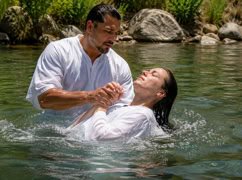
Catholics use holy water as a reminder of their baptism, when they were cleansed of sin and brought into the family of God. That’s why Catholics often dip their fingers into holy water and make the sign of the cross when entering a church. It’s a way of recalling their baptism and renewing their commitment to Christ.1
Holy water is also what the Church calls a sacramental. Unlike the seven sacraments, which were instituted by Christ, sacramentals are sacred signs established by the Church to help prepare us to receive God’s grace.
The Catechism explains that sacramentals don’t confer grace in the same way the sacraments do. Rather, through the Church’s prayers, they dispose us to receive grace and cooperate with it (CCC 1667–1670).2
In other words, the power belongs to God, not to the water.
But Doesn’t the Bible Condemn Such Practices?
Actually, Scripture gives us several examples of God using ordinary material things as instruments of his power.
When Naaman was healed of leprosy, he was told to wash seven times in the Jordan River (2 Kings 5:10–14). There was nothing magical about the Jordan’s water. God healed him through an act of obedient faith.
In John 9:6–7, Jesus made mud with his saliva, put it on a blind man’s eyes, and told him to wash in the Pool of Siloam. The man obeyed and received his sight. Was the mud magical? Of course not.
And in Acts 19:11–12, we’re told that God performed extraordinary miracles through Paul, so that even handkerchiefs and aprons that had touched him were carried to the sick, who were healed.
In each case, God chose to work through something material. The material object wasn’t the source of the power. God was.
So Does Holy Water Actually Do Anything?
Catholics believe that God can grant spiritual blessings through the Church’s prayers and the faithful use of holy water. But holy water doesn’t work automatically, as though merely touching it produces a supernatural result.
The Church explicitly rejects that kind of thinking. The Catechism warns against superstition, including attributing an almost magical importance to religious practices apart from the interior dispositions they require (CCC 2111).3
A person who sprinkles holy water around the house while imagining that it automatically drives away evil, regardless of faith or repentance, has misunderstood its purpose.
Holy water isn’t a spiritual force field. It’s a sacred sign that directs our attention to God and invites us to seek his protection and grace.
Catholics don’t believe holy water has magical powers. They believe God has power, and that he can use ordinary material things to communicate his blessings.
That’s not magic. It’s a thoroughly biblical idea.
__________
1 Catechism of the Catholic Church, 1668; Roman Missal, Appendix II, The Rite for the Blessing and Sprinkling of Water, which connects the use of blessed water with remembrance of baptism.
2 Catechism of the Catholic Church, 1667–1670, especially 1670, which explains that sacramentals do not confer the grace of the Holy Spirit in the way the sacraments do, but prepare the faithful to receive grace and cooperate with it.
3 Catechism of the Catholic Church, 2111: “To attribute the efficacy of prayers or of sacramental signs to their mere external performance, apart from the interior dispositions that they demand, is to fall into superstition.”

Featured Articles
Copyright © 2024–[YEAR] Catholic Odyssey