Common Objections
Common Objections
Common Objections


The Bible doesn’t teach that the pope has authority over the whole Church
It’s true that the Bible doesn’t describe a pope governing the worldwide Church from Rome. But it does describe Jesus giving Peter a particular responsibility for the Church as a whole.
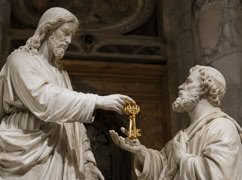
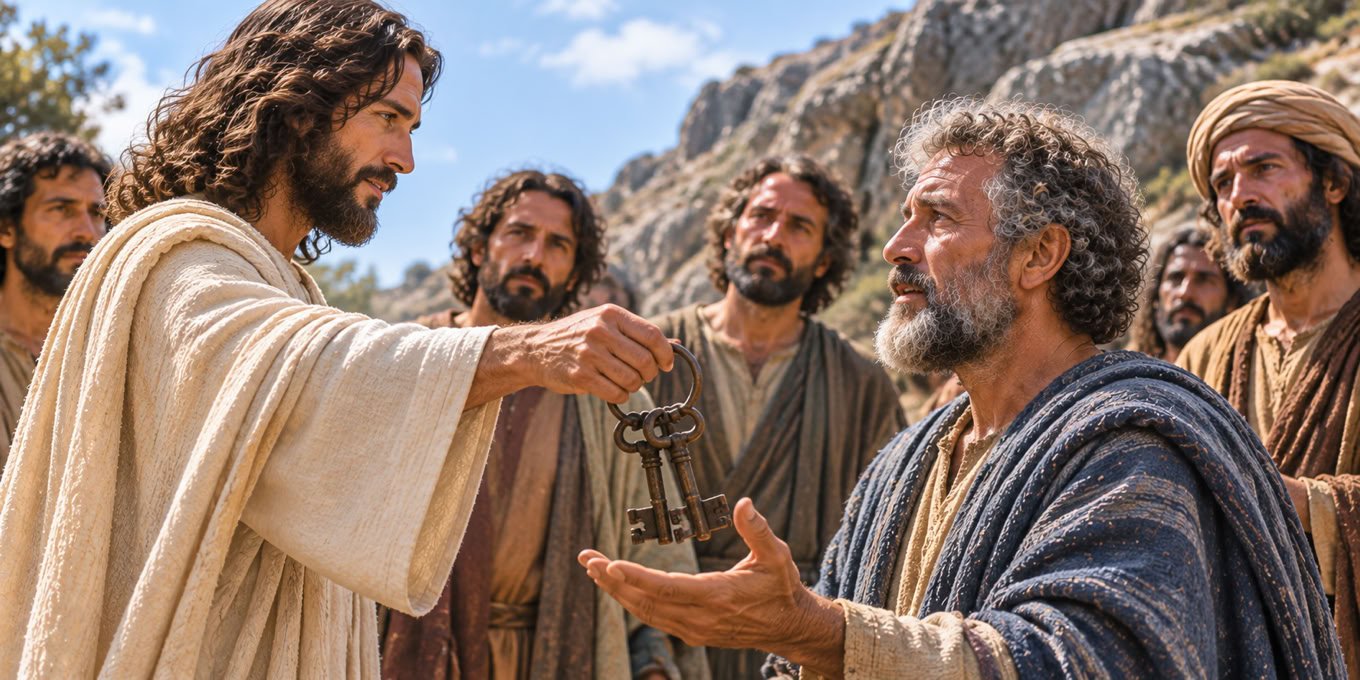
In Matthew 16:18–19, Jesus told Peter, “On this rock I will build my church,” and gave him the keys of the kingdom of heaven, along with the authority to bind and loose.
Notice that Jesus didn’t say he would build Peter’s local congregation on that rock. He said, “I will build my church.”
And the keys weren’t merely symbolic decorations. In the Old Testament, giving someone the key to the royal household signified entrusting him with authority to govern on the king’s behalf (Isaiah 22:20–22).
Then, in Luke 22:31–32, Jesus told Peter that he had prayed specifically for him so that, after turning back, he could strengthen his brothers.
And after the Resurrection, Jesus instructed Peter three times to feed or tend his sheep (John 21:15–17).
These passages don’t describe Peter as merely the leader of one local congregation. They suggest a responsibility for Christ’s flock that extends beyond any single community.
What about Peter’s successors?
Of course, that raises another question: Did Peter’s responsibility end with his death, or was it intended to continue through his successors?
Jesus promised to remain with his Church until the end of the age (Matthew 28:20). If he established Peter as a source of unity and leadership for that Church, why would that responsibility disappear when Peter died? The Church would still need unity, guidance, and leadership long after the apostles were gone.
And the idea of successors wasn’t foreign to the earliest Christians. Around AD 96, Clement of Rome explained that the apostles had appointed Church leaders and provided for other men to succeed them after their deaths.1
By the late second century, Irenaeus could trace the succession of bishops in Rome from the apostles Peter and Paul through Linus, Anacletus, Clement, and their successors. He also appealed to the Roman Church’s special standing as a safeguard of the faith received from the apostles.2
That doesn’t mean the papacy existed in its present form in the first century. But it does show that the idea of continuing Church leadership, handed down from the apostles through their successors, wasn’t a medieval invention.
Because Peter ended his ministry as leader of the church in Rome, where he was martyred, Catholics believe that his successors as bishop of Rome inherited his responsibility for the universal Church—a responsibility intended to continue throughout the Church’s history.
__________
1 Clement of Rome, First Letter to the Corinthians 44. [Full text]
2. Irenaeus, Against Heresies 3.3.2–3. [Full text]
Featured Articles
Copyright © 2024–[YEAR] Catholic Odyssey