Common Objections
Common Objections
Common Objections


The Catholic Church isn’t the Church Jesus founded
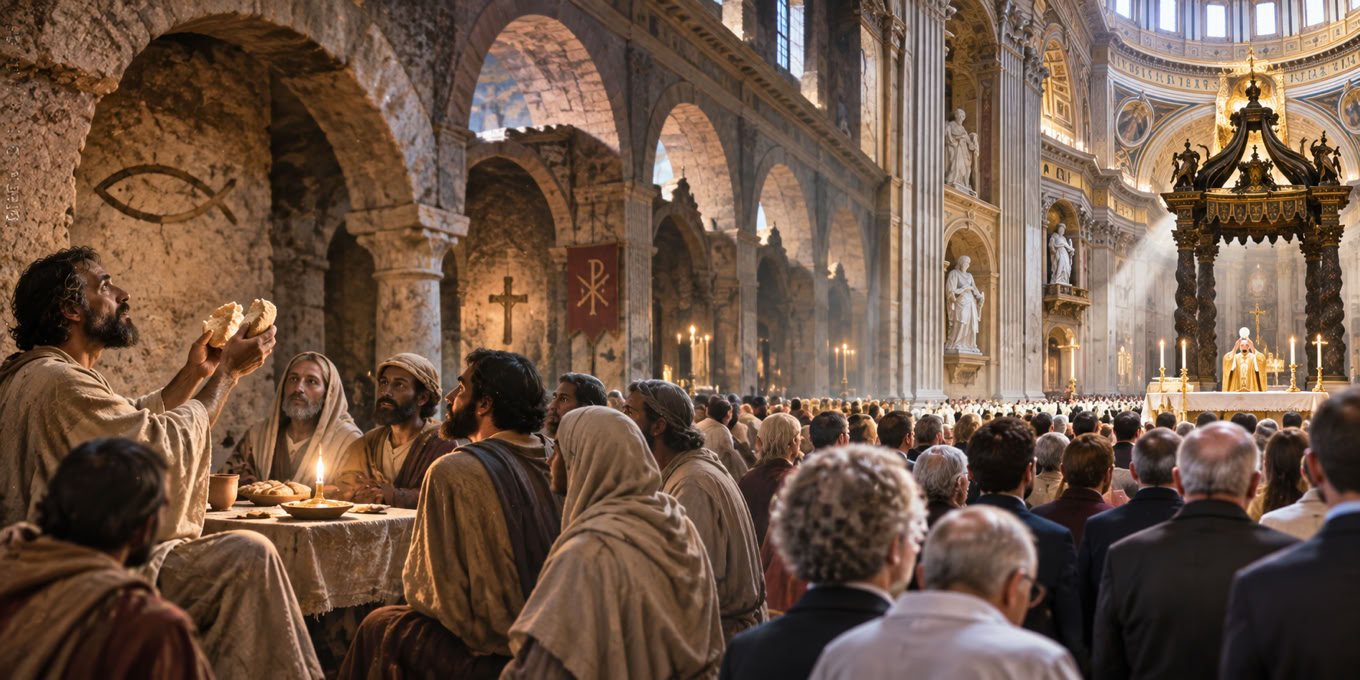
Many evangelical Christians believe that the Catholic Church developed centuries after Jesus and the apostles, gradually accumulating doctrines, ceremonies, and institutions that weren’t part of original Christianity.
They may acknowledge that the Catholic Church has ancient roots. But they don’t believe it’s the Church Jesus established.
That raises an interesting question: What happened to the Church Jesus did establish?
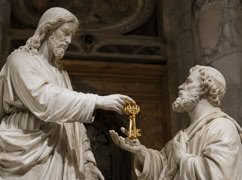
Jesus told Peter, “On this rock I will build my church, and the gates of Hades shall not prevail against it” (Matthew 16:18). And before ascending to heaven, he promised his apostles, “I am with you always, to the close of the age” (Matthew 28:20).
Those promises suggest that Christ’s Church wasn’t supposed to disappear after the apostles died, only to be restored centuries later.
So where did it go?
The Church didn’t disappear
The New Testament describes a visible community of believers with recognized leaders, common worship, and an obligation to preserve and teach what the apostles had handed down.
The apostles appointed leaders in the churches they established (Acts 14:23). Paul instructed Timothy to entrust his teaching to faithful men who would be able to teach others (2 Timothy 2:2). And Christians were told to obey those who had responsibility for their spiritual welfare (Hebrews 13:17).
That pattern didn’t end when the apostles died.
Around AD 107, Ignatius, bishop of Antioch, wrote to Christians in Smyrna:
Wherever the bishop appears, there let the people be; even as wherever Jesus Christ is, there is the Catholic Church.1
That’s a remarkable statement. Within a generation or two of the apostles, Christians were already speaking of the Catholic Church, and Ignatius understood it as a visible community united around its bishops.
The word catholic means universal. Ignatius wasn’t referring to a denomination competing with other Christian denominations. He was describing the Church to which Christians belonged.
But hasn’t the Church changed?
Of course it has.
The Catholic Church today has cathedrals, religious orders, councils, canon law, and a highly developed administrative structure. The earliest Christians had none of those things in their present form.
But change doesn’t necessarily mean a loss of identity.
A grown man bears little resemblance to the baby from which he grew. Yet he’s the same living organism.
Likewise, the Church Jesus founded was never intended to remain frozen in its first-century form. As Christianity spread throughout the world, new questions arose, controversies had to be resolved, and the Church developed ways of expressing and defending what it believed.
The important question isn’t whether the Church has changed. It’s whether those changes represent legitimate development or departures from what Jesus and the apostles taught.
And that’s a question we have to examine doctrine by doctrine, not settle simply by pointing out that Catholics today do things differently from Christians in the first century.
Where is the alternative?
If the Catholic Church isn’t the continuation of the Church Jesus founded, where was that Church in the second century? The fifth? The tenth? Who were its leaders, and what did they teach?
Some evangelicals believe that the true Church survived as a hidden, persecuted remnant while the institutional Church gradually abandoned the faith.
But who were these Christians?
It’s easy enough to find groups throughout history that disagreed with the Catholic Church. Some were persecuted for their beliefs, sometimes shamefully. But disagreeing with Rome doesn’t automatically make a group evangelical.
Did these Christians believe what today’s evangelicals believe about baptism, salvation, the Eucharist, and the authority of Scripture? And can their communities be traced back to the apostles?
If we can’t identify this alternative Church, aren’t we simply assuming that it must have existed somewhere?
Other Protestants argue that Christ’s true Church has always consisted of all genuine believers, regardless of the institutions to which they belonged.
Catholics agree that belonging to Christ is more important than merely having one’s name on a church membership roll. But the New Testament doesn’t describe the Church merely as an invisible collection of individuals who share the same faith.
It describes a visible community with recognized leaders, shared worship, and authority to teach and settle disputes (Acts 15:1–29).
And that’s the kind of Church we find in the writings of the earliest Christians.
A question of continuity
Catholics don’t claim that every practice in today’s Church existed in exactly the same form in the first century. Nor do they claim that every Catholic leader throughout history has been faithful to Christ.
They claim something more fundamental: that the Catholic Church is the historical continuation of the community Jesus established through his apostles, preserving its essential faith and structure despite the changes and failures of the centuries.
That claim can be examined. We can compare what Catholics believe with Scripture and the writings of the earliest Christians. We can ask whether particular doctrines represent faithful developments or genuine departures from apostolic teaching.
But simply pointing to the differences between the first-century Church and the Catholic Church today doesn’t establish that they’re two different churches.
After all, if the Catholic Church isn’t the Church Jesus founded, we’re still left with the question:
Where is the Church he founded, and what happened to it?
__________
1 Ignatius of Antioch, Letter to the Smyrnaeans 8:2, approximately AD 107. [Early Christian Writings]
Featured Articles
Copyright © 2024–[YEAR] Catholic Odyssey